
Choosing a Harness or a Head Halter
Guidelines offered by Health Committee member Julie Whaley.
Choosing the proper lead for your dog can depend on many factors such as a dog's shape, behavior, training needs and size.
When looking for a harness one thing to think about is where the leash will attach, as different clip styles serve different purposes.
Harnesses with the D ring on a dog's back are typically used for dogs that already walk well on a leash, smaller dogs, or casual walks. These harnesses can be comfortable for the dog; prevent pressure on the neck and throat and are easy to put on. They are not ideal for dogs who pull, as it can engage their natural opposition reflex and encourage pulling behavior similar to that of a sled dog.
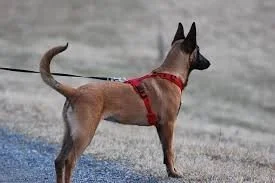
Harnesses with the D ring in the front are good for training dogs not to pull, large or strong dogs, and ones that are easily excitable or reactive. These harnesses can provide more control by gently redirecting the dog's attention sideways toward you when they pull thus causing a dog to slow down because they don’t want to walk sideways. This can help to reduce strain on your arm and shoulder. In a shorter dog the leash can sometimes get tangled in your dog's front legs.
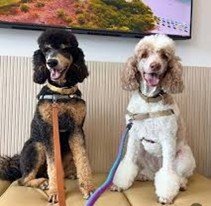
Harnesses with a dual clip are good for versatility, training, or for escape artists who need extra security. They offer both front and back attachment points, allowing you to switch based on the situation. They can also be used with a double-ended leash for maximum control.
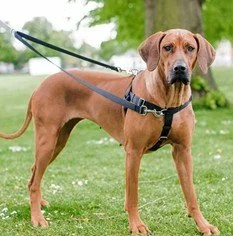
Head halters are another great option for a larger breed of dog. They are used with the same theory of leading a horse. You never want to lead a horse with something around its body because of how strong they are. You lead a horse by their head because it’s the weakest part of their body giving you better control over them.
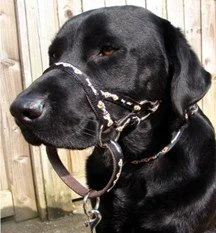
A head halter is used on a dog to provide gentle control over their head to prevent pulling. This can make training easier for both the dog and the owner. It works by turning the dog's head back towards the handler when they pull. This redirects their focus away from distractions. This type of lead is especially useful for large, strong, or reactive dogs.